
In regulated clinical use, stem cell therapy does not appear to inherently cause tumors.
But not all stem cell clinics follow regulations or best practise.
And realistically most of the research we have is 1-8 years so after this, we really don’t have the data to say what will happen.
We go into more detail below.
This is where our team steps in. If you’re worried about the side effects of treatment, our team has personally vetted Stem Cell clinics globally to make sure you can choose clinics you can trust. We continually speak to every patient who gets treatment with our clinics, so we can track success rates but also clinic quality continuously.
Stem Cells and Tumors
Stem cells are often called the body’s “blank slate” cells because they can turn into many different cell types. This flexibility makes them powerful for regenerative medicine but in some cases, it also comes with risks.
Pluripotent stem cells, like embryonic stem cells and induced pluripotent stem cells, can form growths called teratomas if they are transplanted before being fully prepared in the lab.
Teratomas are a type of benign (non-cancerous) tumor that contains mixed tissues such as hair, muscle, or cartilage.
It’s important to note that not all stem cells carry this risk. The stem cells most often used in clinics today, mesenchymal stem cells and hematopoietic stem cells have not been linked to teratoma formation.
Modern clinical trials using ESCs or iPSCs only transplant cells that have been carefully pre-differentiated and so far, these trials have not reported tumor formation.
1. Can Embryonic Stem Cells (ESCs) Cause Tumors?
So far, no tumors have been reported in any regulated human ESC trials.
- ESCs can develop into any cell type, which makes them powerful for research.
- But if undifferentiated ESCs are transplanted, they can form benign growths called teratomas.
- That’s why clinical trials only use carefully prepared ESC-derived cells (such as retinal cells) and so far no tumors have been reported in regulated human studies.
- You can read more about these trials specifically in our AMD research Article.
- Even though no tumors have been found, there still isn’t enough evidence to say embryonic stem cells are safe for general treatment. Which is why no clinic globally will offer ESC Cells outside of regulated trials.
- Clinics do NOT use these in treatments.
2. Can Induced Pluripotent Stem Cells (iPSCs) Cause Tumors?
iPSCs can theoretically form tumors if handled improperly, but in current regulated clinical trials, no tumor formation has been reported.
- iPSCs are adult cells (like skin or blood) that scientists reprogram to act like ESCs.
- They carry a similar risk of teratoma (a type of tumor) formation if any powerful, undifferentiated cells are accidentally included in the final transplant.
- To prevent this, researchers use strict techniques to create the cells, purify them, and perform safety checks before they are ever used in patients.
- A lot of this safety research is highly targeted. For example, a 2022 scientific review published in the journal Frontiers details multiple strategies being tested specifically to make future cell therapies for diabetes safe from tumors.
- In clinical settings such as early human trials for Parkinson’s disease, macular degeneration and spinal cord injury no tumors have been observed to date, even after several years of follow-up.
- There has been one rare case in 2022 where a poorly prepared iPSC treatment caused a tumor (read about it here). It happened outside a regulated trial and highlighted how vital proper safety controls are. In approved studies, this hasn’t occurred.
- But there still isn’t enough evidence to say iPSC Cells are safe for general treatment, which is why no clinic globally will offer iPSC Cells outside of regulated trials.
- Outside of Japan, no clinic or hospital is offering these cells.
3. Can Mesenchymal Stem Cells (MSCs) cause Tumors
In research data so far, MSC Cells haven’t been found to cause tumors.
- A major review of the science published in 2025 directly addressed the fear that stem cell therapy could cause tumors. After analyzing 217 different clinical trials, the researchers found no evidence that properly performed MSC treatment leads to an increased risk of cancer. Their conclusion was that the cells did not turn into cancerous growths or encourage them to form in the body.
- The data from the controlled trials, which included thousands of patients, supported this conclusion. The rate of new cancers in patients who received MSCs was actually slightly lower than in patients who did not receive the treatment
- The researchers confirmed this difference was not statistically significant, meaning the cancer rates in both groups were effectively the same.
- The researchers did point out one important limitation to keep in mind. While the majority of patients in the review were followed for at least six months, some of the 217 studies had shorter follow-up periods. They noted it’s conceivable that a tumor could develop after data collection had ended in these shorter studies, highlighting the need for continued long-term safety monitoring
- Some scientists note a theoretical risk that MSCs could help hidden tumors grow, since they release healing signals that also encourage new blood vessel formation.
- However, this has never been seen in human studies, and large clinical trials show MSC treatments do not increase cancer risk.
- These are the cells most clinics use in treatment.
- We go into more detail on the types of Stem Cells here.
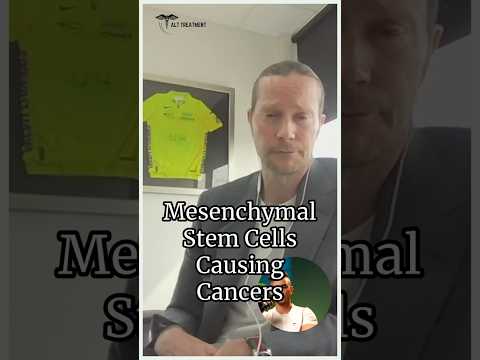 Watch on YouTube
Associate Professor Dr Julien Freitag, Leading MSC therapy specialist, addresses one of the most common patient concerns directly and explains what the clinical evidence actually shows about whether Mesenchymal Stem Cells can cause tumors.
Watch: Do Mesenchymal Stem Cells Cause Tumors? →Read these before booking any consultations


4. Can Hematopoietic Stem Cell (HSC) Treatments Cause Tumors?
Hematopoietic stem cell treatments do not cause tumors. Any rare cancers seen after transplants are linked to chemotherapy or immune effects, not the stem cells themselves.
- Hematopoietic stem cells are the blood-forming stem cells used in bone marrow and blood transplants. Treatments that have been safely used for decades to cure blood cancers and immune diseases.
- These cells themselves do not cause tumors.
- However, people who receive bone marrow transplants sometimes develop secondary cancers years later.
- This is mainly due to the strong chemotherapy or radiation used before the transplant, or long-term immune system changes, not because of the stem cells.
- In very rare cases (less than 1%), the new donor stem cells can later turn cancerous, but this is extremely uncommon and carefully monitored for in long-term follow-ups.
- Overall, HSC treatments are considered very safe, and the benefits in saving lives from blood diseases far outweigh the small background risks.
What Do the Studies Say about Stem Cells causing Tumors?
Across more than 90 human stem cell studies completed in the past 10 years, none have shown any signs of tumor growth. Still, because most patients’ follow ups have been for short periods, in the long term can’t say for sure what will happen.
Studies have highlighted that iPSCs are more prone to genetic mutations during the reprogramming process. This increases the risk of tumor development.
On the other hand, MSC-based therapies have shown very low risks of tumor formation. They have limited ability to differentiate and divide.
Researchers stressed the need to control the environment where ESCs grow to prevent abnormal cell development. If not regulated properly, these cells could develop teratomas, making it essential for further research and monitoring in clinical applications
If you want to read more on IPSC’s specifically, we’ve got a write up on everything to do with them here.
Conclusion: Do Stem Cells Cause Tumors?
Only certain types of stem cells, such as embryonic stem cells and induced pluripotent stem cells, can cause small benign tumors if they are not carefully prepared but no trials have reported any tumors to date.
The stem cells most often used in medicine today, like mesenchymal stem cells and hematopoietic stem cells, are not linked to tumor growth.
In lab studies, embryonic and induced pluripotent stem cells have sometimes formed growths called teratomas, which are non cancerous lumps of mixed tissue. This is why clinical trials do not use these cells in their raw form. Instead, scientists first guide them to become the specific type of cell needed, such as eye or nerve cells, before using them in patients. So far, human trials that follow this process have not reported tumor growth.
By comparison, mesenchymal stem cells, which are the type most often used for arthritis, autoimmune conditions & general clinic-based treatments, do not form tumors. Hematopoietic stem cells, which are used in bone marrow transplants for blood cancers, also have a long record of safe use.
The risk of tumors only applies to certain pluripotent stem cells if they are not handled correctly. The stem cells currently used in most medical treatments are considered safe.
If you want to look more into how Stem Cell Therapy works in more detail, this article on the full process might be helpful!
Alt Treatment is a free, independent platform that helps you understand stem cell therapy & decide if it’s right for you.
We break down complex information into clear, honest guidance. When you’re ready, we can connect you with verified clinics that meet your needs, in the right location & often with exclusive discounts.
There’s no charge to use our platform. No hidden fees. No pressure. Our main aim is to genuinely help you figure out if treatment is right & the best places to consider.
If you want to talk, fill out our form here & our personal concierge team will reach out.
Common side effects of getting Stem Cells are fever and local pain/swelling at the injection site. We go into all of the side effects in more detail in our Stem Cell Therapy Side Effects Article
Most stem cell therapies work by releasing healing signals that reduce inflammation, regulate the immune system, and stimulate the body’s own repair processes. To learn more, see our full guide on How Stem Cell Treatments Work
No, right now Stem Cell Therapy hasn’t been proven to be a total cure for Parkinson’s. Early data does show it might be able to slow down symptoms & progression of Parkinson’s. To read more of the latest data, our Parkinson’s Research article might be helpful.
Or to see what other conditions Stem Cell Therapy can help with & how much treatment will cost, check out our Area of Treatments section.
Fill in your details below
For a discounted offer for Stem Cell Therapy!